
Most people think about drinking water when they worry about water quality. But for many homeowners, the biggest daily exposure to chlorine actually happens in the shower.
Hot showers don’t just rinse chlorine off your body — they can increase how much chlorine your body absorbs and inhales. Over time, that exposure can affect your hair, skin, and even your respiratory health.
Why Is There Chlorine in the Water?
Chlorine is widely used by municipal water systems to kill bacteria and keep water safe as it travels through pipes. In Florida, chlorine levels tend to be higher than average because:
- Warm temperatures promote bacterial growth
- Long pipe runs require higher disinfectant levels
- Many systems use chlorine or chloramine year-round
As a result, our water — especially in Coastal cities — often contains strong chlorine concentrations by the time it reaches your home. That’s great for disinfection. Not so great for your body.
What Happens When You Shower in Chlorinated Water?
When hot water hits your skin, pores open. Steam fills the air. And chlorine begins to off-gas, meaning it turns into vapor that you breathe in.
This creates three exposure pathways at once:
- Skin absorption
- Hair and scalp contact
- Inhalation of chlorine vapor
Chlorine and Your Hair
If your hair feels dry, brittle, or lifeless — chlorine may be a major reason.
Chlorine:
- Strips natural oils from hair
- Weakens hair shafts, leading to breakage
- Fades color-treated hair faster
- Irritates the scalp, contributing to dryness or flaking
Chlorine and Your Skin
Your skin relies on natural oils and a healthy barrier to stay hydrated. Chlorine disrupts that balance.
Common skin issues linked to chlorinated shower water include:
- Dryness and tightness after showering
- Itching or redness
- Worsening of eczema or sensitive skin conditions
- Increased irritation for children and babies
For people with already sensitive skin, daily chlorine exposure can make symptoms harder to control.
The Hidden Issue: Inhaling Chlorine in the Shower
This is the part most people don’t realize.
Hot showers release chlorine into the air as a gas. Breathing that steam can:
- Irritate the nose, throat, and lungs
- Trigger asthma or respiratory sensitivity
- Cause coughing or chest tightness in some individuals
Some experts compare a long, hot shower with chlorinated water to standing over an open pool, but in a small, enclosed space.
Why Drinking Water Filters Aren’t Enough
Many homeowners install a kitchen filter or reverse osmosis system and assume they’re covered.
However:
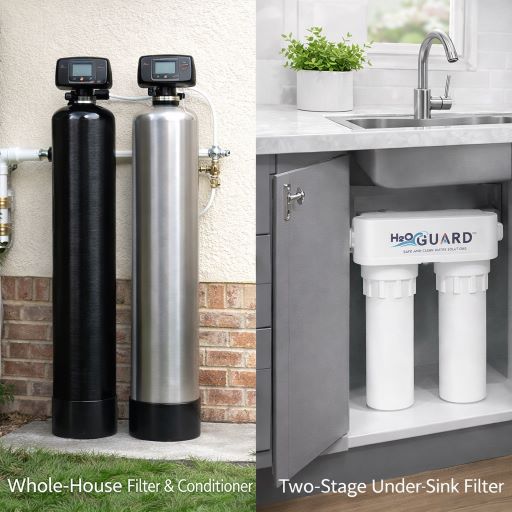
- Shower water is not filtered by under-sink systems
- Whole-house systems may reduce chlorine, but not always completely
- The shower is where hot water + steam = higher exposure
That’s why shower-specific filtration matters.
How Shower Filters Help Reduce Chlorine Exposure
High-quality shower filters are designed to reduce chlorine before it reaches your skin, hair, and lungs.
A properly designed shower filter can:
- Reduce chlorine and chlorine odor
- Help protect hair and skin
- Improve breathing comfort during showers
- Be installed easily without plumbing changes
For many Florida homes, a shower filter is one of the simplest and most noticeable water upgrades.
H2O Shower Filters: Designed to remove chlorine
H2O International offers shower filtration solutions specifically selected for high-chlorine environments.
H2O shower filters:
- Target Free Chlorine
- Use proven filtration media. 100% KDF
- Are easy to install and maintain
- Are ideal for homes, apartments, and rentals
They’re especially popular with:
- Families with children
- People with sensitive skin or allergies
- Anyone experiencing dry hair or skin after showering
A Small Change That Makes a Big Difference
You shower every day. That exposure adds up.
Reducing chlorine in your shower water isn’t about luxury — it’s about comfort, health, and long-term skin and hair care, especially in high-chlorine regions like Florida.
For many homeowners, a shower filter is the first upgrade they feel immediately — softer skin, healthier hair, and a more comfortable shower experience.
Frequently Asked Questions
Is chlorine in shower water dangerous?
At typical municipal levels, chlorine is considered safe, but long-term exposure can cause irritation and discomfort for many people.
Does boiling water remove chlorine?
Boiling can reduce some chlorine, but it does not help in the shower and does nothing for inhalation exposure.
Are shower filters hard to install?
Most shower filters install in minutes and do not require tools or plumbing experience.
Is Florida water higher in chlorine than other states?
In many areas, yes — especially in warm, coastal regions where higher disinfectant levels are required.