You bought better beans.
Maybe you upgraded the grinder.
You learned the difference between a flat white and a cortado.
But there is one ingredient making up almost the entire cup that usually gets very little attention:
The water.
Whether you’re making coffee or tea, the water going into the cup can have a noticeable effect on what eventually comes out.
Coffee Isn’t Just Coffee Beans
Think about a normal cup of coffee.
The beans provide the flavor.
But water is what extracts that flavor and carries it into the cup.
So if your water has a noticeable chlorine taste or odor, it can become part of the drinking experience too.
The same thing happens with tea.
You can buy beautiful loose-leaf tea, use the right temperature, and steep it perfectly, but you’re still starting with the water coming from your tap.
Cold Water Can Hide More Than Hot Water
One interesting thing about drinking water is that temperature changes how we experience taste and smell.
Very cold water can make certain tastes less noticeable.
Once that same water is heated for coffee or tea, however, you may become more aware of flavors or odors that you barely noticed when drinking it chilled.
That means your morning coffee can sometimes tell you something about your water that your cold glass of water didn’t.
Start With Better-Tasting Water
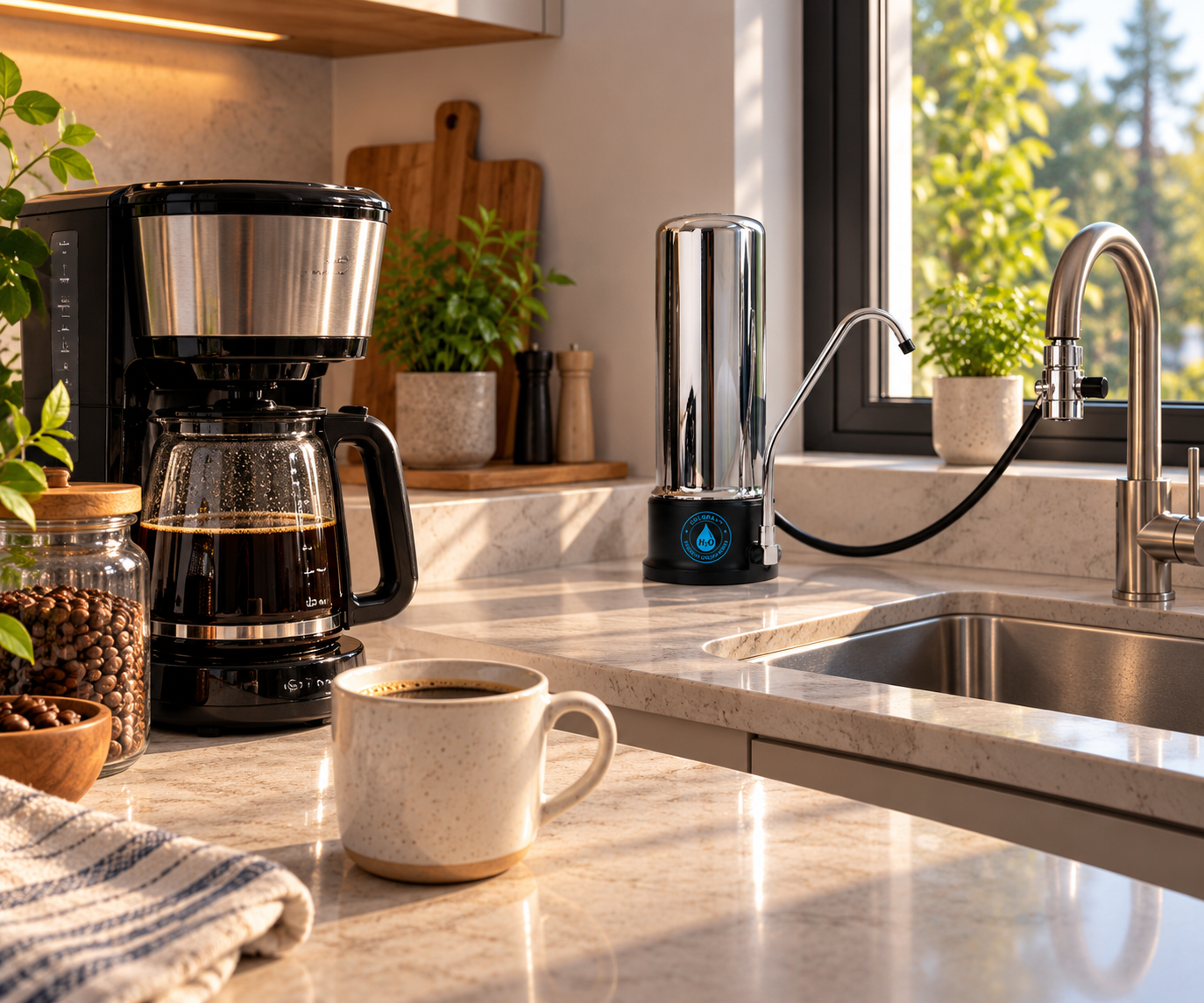
H₂O International® offers countertop filtration systems designed specifically for kitchen drinking water.
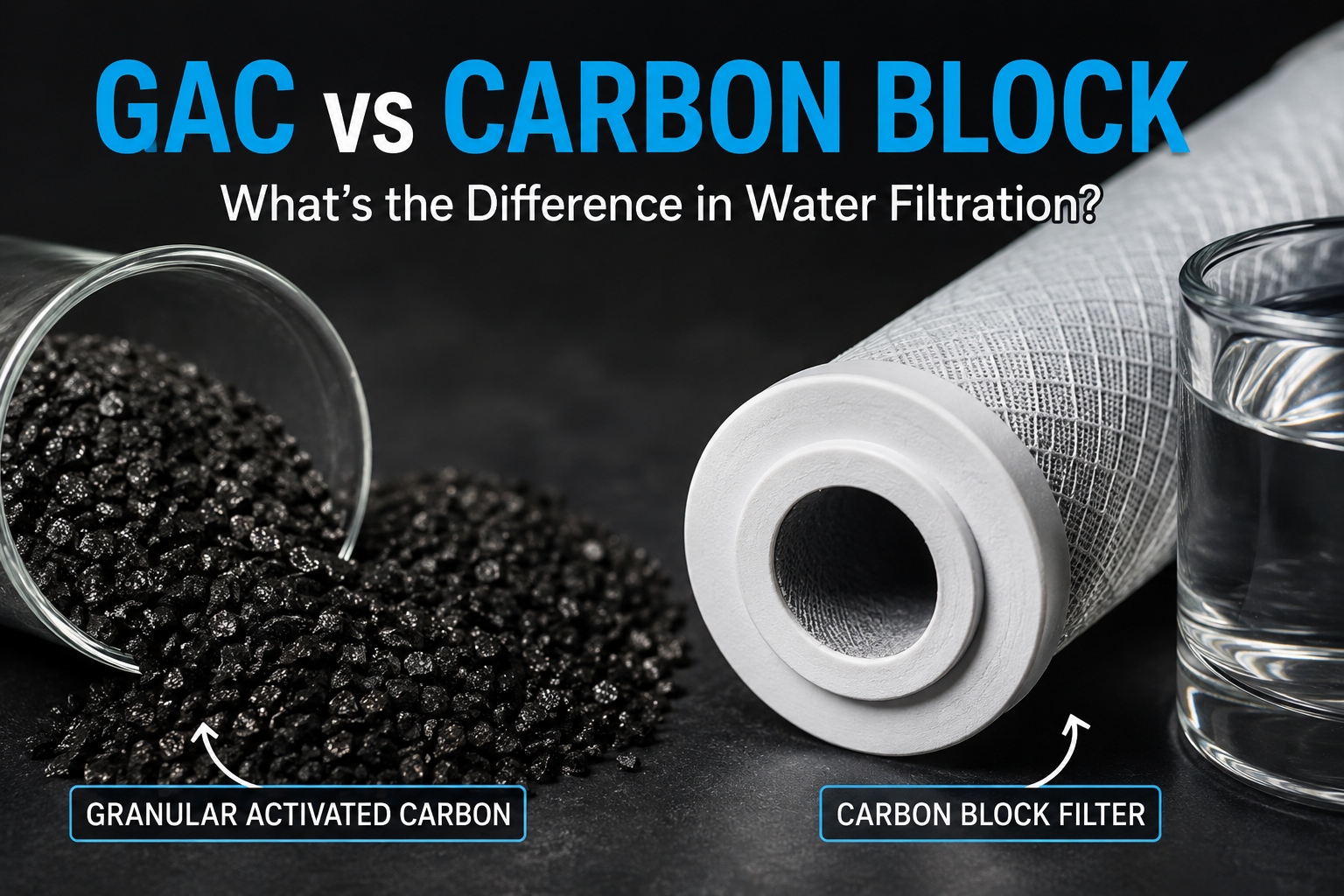
The H₂O International® Chrome Plated Countertop Water Filter uses GAC/KDF® filtration media to reduce chlorine and improve the color, taste, and odor of the water. It connects directly to the kitchen faucet and uses a replaceable cartridge.
There is also an H₂O Chlora+™ version designed for water supplies where chloramine is present, reducing both chloramine and chlorine while improving taste and odor.
The important part isn’t simply adding “a filter.”
It’s using filtration appropriate for the water you’re starting with.
Your Coffee Machine Drinks It Too
And it isn’t only about flavor.
Any appliance that regularly uses water is interacting with whatever is dissolved in that water.
Coffee machines.
Espresso machines.
Kettles.
Hot-water dispensers.
Automatic coffee makers.
H₂O even lists its inline appliance filtration as suitable for appliances such as in-line coffee makers, giving another option where filtration needs to happen directly on an appliance’s water supply.
You Don’t Need to Become a Coffee Scientist
You don’t need scales, refractometers, and a laboratory every morning.
This is much simpler.
If you’re already spending money on good coffee or tea, using water that tastes good makes sense.
We tend to think of filtration as something we do because we want a better glass of drinking water.
But filtered water goes much further than that.
It’s the pasta you boil.
The vegetables you cook.
The ice in your drink.
And the water extracts flavor from your coffee every morning.
The Ingredient You Forgot About
Next time you’re disappointed with a cup of coffee, don’t immediately blame the beans.
Before buying another grinder, another coffee maker, or another bag of specialty roast, try something much simpler.
Look at the water.
Because sometimes improving your coffee doesn’t start at the coffee shop.
It starts at the kitchen tap.