You rinsed it.
Soaped it.
Washed every panel.
Rinsed it again.
Then the sun came out.
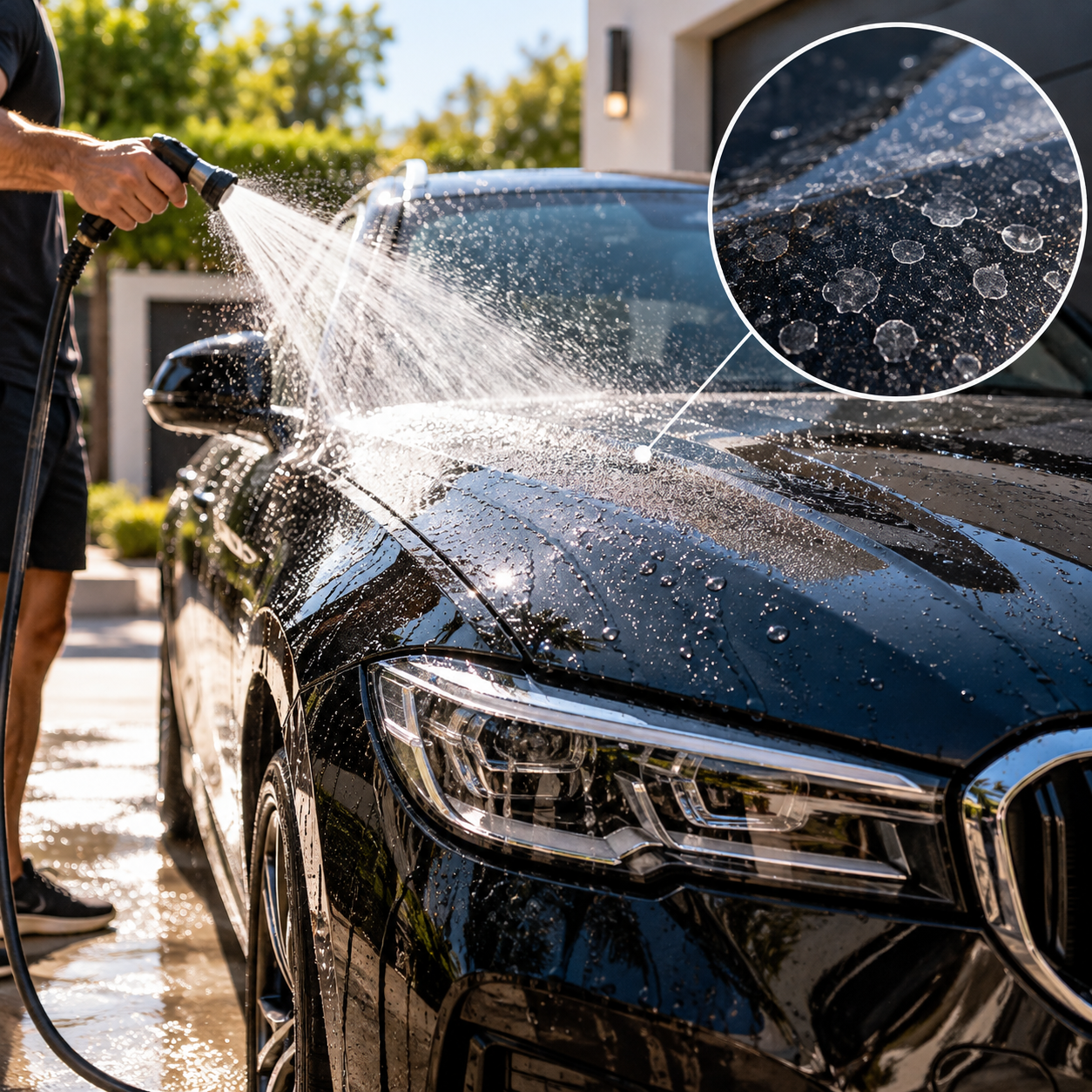
And suddenly your clean car is covered in little white spots.
Sound familiar?
Before blaming your soap, drying towel, or car-washing technique, there is another possibility worth looking at:
The water itself.
What Causes Water Spots?
Water spots often appear when water droplets are left to dry on the surface of your car.
The water evaporates.
But the minerals dissolved in it don’t.
If your home has hard water, those minerals can include higher levels of calcium and magnesium. Once the water dries, some of those minerals can remain behind as visible residue.
That same hardness can also show up elsewhere around the home, on shower glass, faucets, fixtures, and appliances. H₂O International notes that hard water can leave calcium deposits and scale behind as water evaporates. H2O International FAQ
Your car is simply another shiny surface where those marks become very obvious.
A Black Car Will Tell You Very Quickly
If you own a dark-colored car, you probably know exactly what we’re talking about.
Black.
Navy.
Dark gray.
The finish can look incredible when it’s clean.
It can also make every dried water spot painfully visible.
Even lighter vehicles can show spotting on windows, mirrors, chrome, and glossy trim.
And if you wash the car in direct sunlight, those droplets can dry even faster.
Drying Helps, But It Doesn’t Change the Water
Drying your vehicle properly after washing is still important.
A microfiber drying towel or air dryer can reduce the amount of water allowed to evaporate naturally on the paint.
But you’re still washing the vehicle with the same water in the first place.
If hard water is an issue throughout your property, the bigger question becomes:
Can the water be treated before it reaches the hose?
This Is Where Whole-House Water Softening Comes In
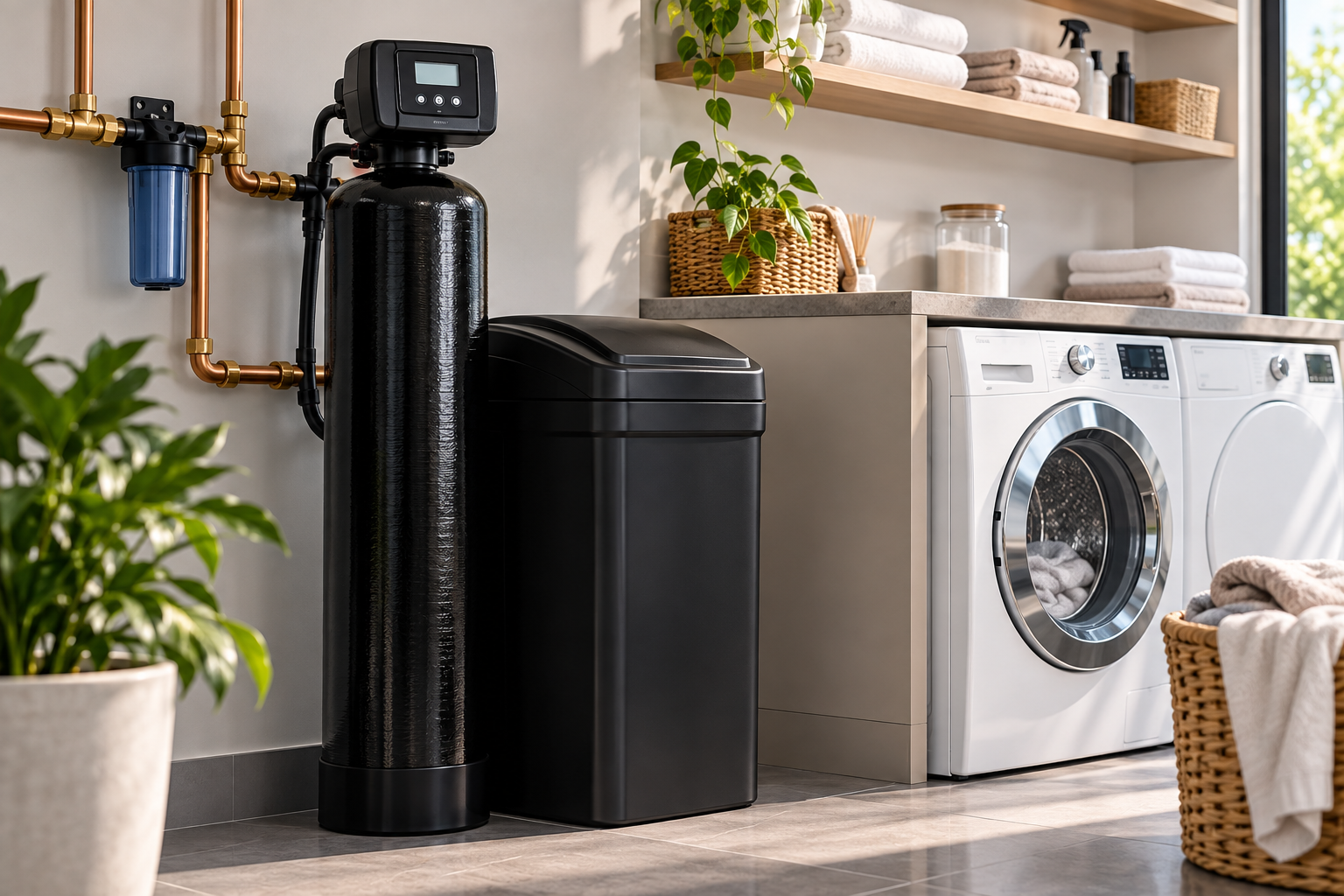
The H₂OGuard® Whole House Water Softener uses ion-exchange technology to reduce hardness-related scale buildup and protect plumbing and appliances throughout the home. It is available in multiple sizes depending on the application. H2O International FAQ
Because it treats water at the whole-house level, the benefit isn’t limited to one kitchen faucet.
It can affect water used throughout the property.
That means the same water used for your shower, laundry, appliances, and outdoor hose can all be part of the same water-treatment conversation.
What If You Don’t Want a Traditional Softener?
There are other approaches to scale management too.
H₂O International also offers the H₂OGuard® ScaleGon™ Whole House Water Conditioner, a salt-free scale-prevention system designed to help protect pipes, fixtures, and appliances without removing calcium and magnesium from the water. H2O International FAQ
The right option depends on your water conditions, household needs, and what you’re trying to solve.
That’s why water treatment should start with understanding the water first.
Better Water Can Make Everyday Jobs Easier
We usually think about water quality in terms of what we drink.
But working water matters too.
It’s the water running through your washing machine.
The water hitting your shower glass.
The water is flowing through your appliances.
And every weekend, it might also be the water you’re spraying all over your car.
So next time you finish a wash and wonder why your paint is covered in spots, don’t automatically blame the car shampoo.
Take a look at the water.
Because sometimes a cleaner-looking car starts long before the sponge touches the paint.